
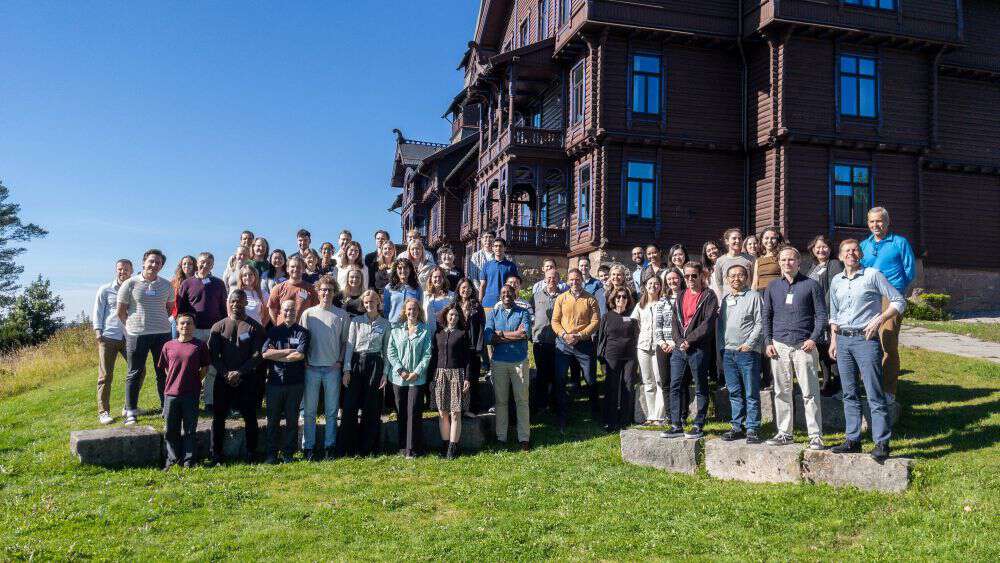
One team, six countries
From 8 to 11 September, Oslo hosted this year's MATCHMAKERS meeting. MATCHMAKERS is an international research team that received funding from Cancer Grand Challenges in 2024. The team is led by Michael Birnbaum at MIT and brings together researchers from ten institutions in Germany, the Netherlands, Norway, the United Kingdom and the United States. The team was awarded 25 million US dollars for 2024–2029 after a global competition, and its researchers include David Baker, winner of the 2024 Nobel Prize in Chemistry.
The goal is to understand how T cells recognize cancer cells, and to develop AI tools that can predict which targets a T-cell receptor recognizes. In the long run, this could make it possible to design tailored immunotherapy for each patient.
The week began with a workshop on patient involvement, continued with an open symposium and banquet, and ended with two days in which the research team worked internally on the project.
“It was a huge inspiration to gather so many world-leading scientists in immunotherapy in Oslo for presentations and interactions with the local immunology environment!”, says Johanna Olweus, Centre Director of PRIMA..

Artificial intelligence at the centre
The symposium, titled “Breaking the T cell – cancer recognition code”, explored how artificial intelligence can be used to develop immunotherapy. The talks covered functional screening platforms, structural biology and AI tools that predict which targets T-cell receptors recognize and that can design new immune receptors. An important aim was to bring this knowledge to the Norwegian biotech sector.
T cells are the immune system's most important defence against cancer. For immunotherapy to work, researchers need to understand exactly how T-cell receptors recognize cancer cells. New AI tools for protein structure and protein design are now making it possible to solve this problem. The field has deep roots at the Norwegian Radium Hospital and is central to PRIMA's research.
The speakers included Michael Birnbaum (Massachusetts Institute of Technology), Chris Garcia (Stanford University), Peter Bruno (University of California, San Francisco), Phil Bradley (Fred Hutchinson Cancer Center), Nik Sgourakis (Children's Hospital of Philadelphia), Dirk Busch (Technical University of Munich) and Johanna Olweus (PRIMA associated with Oslo University Hospital and University of Oslo). Regina Barzilay (Massachusetts Institute of Technology) and Sergio Quezada (University College London) gave their talks online. Ton Schumacher of the Netherlands Cancer Institute chaired the symposium.Steve Elledge (Harvard Medical School) was unfortunately unable to attend.
A full house in Holmenkollen
More than 200 participants filled the Saga hall, among them researchers, PhD candidates and postdocs, clinicians, and people from biotech, the pharmaceutical industry and innovation communities. Chris Garcia opened the scientific programme with a talk on how the structure of T-cell receptors can help AI understand how they recognize cancer cells. Michael Birnbaum's talk was a memorial lecture in honour of dentist Olaf Aase and his wife.
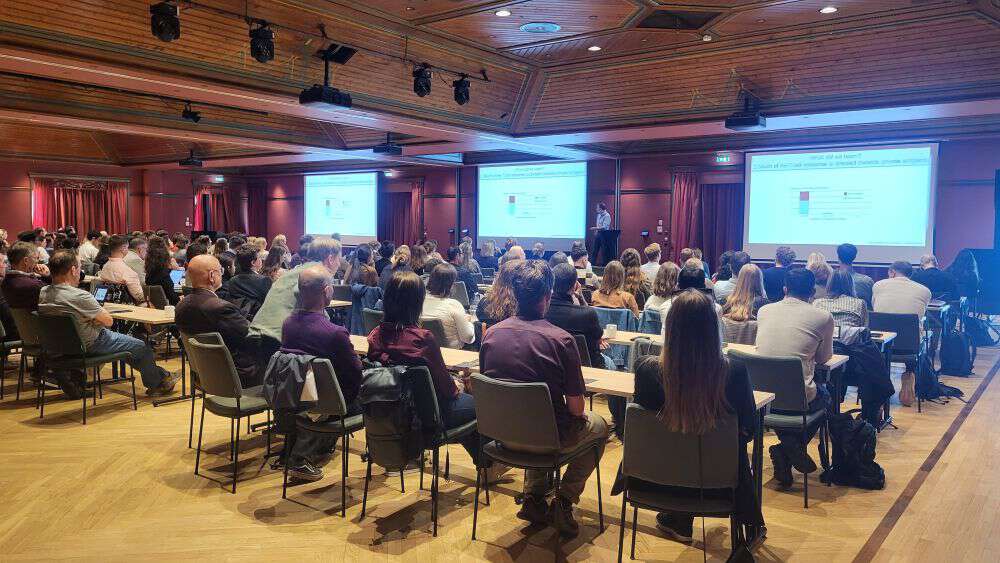
Four days, four gatherings
8 September: Patient advocacy meeting. The week opened with a workshop at Villa Ekebakken on how patients can be involved in pre-clinical and basic research. The workshop was organized together with the Norwegian Cancer Society and brought together around 40 participants: 14 Norwegian patient advocates, three patient advocates from MATCHMAKERS, the Norwegian Cancer Society, and researchers from PRIMA and MATCHMAKERS.
The programme covered the Norwegian model for patient involvement in research, a conversation with the patients themselves, and small-group discussions on what participants would take home. Afterwards, the MATCHMAKERS patient advocates were given a tour of the Olweus lab at the Norwegian Radium Hospital.
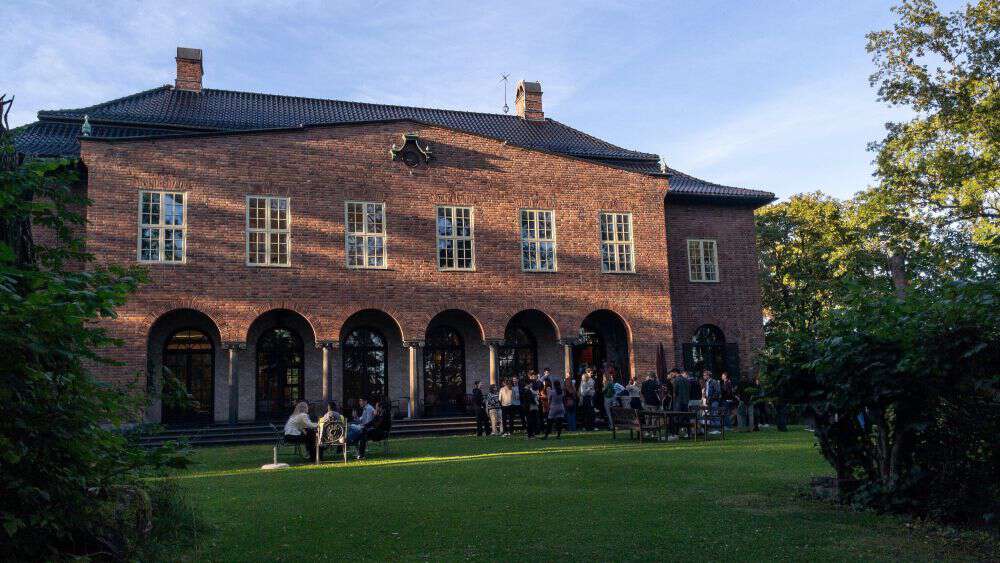
9 September: Open symposium.The full-day symposium at Scandic Holmenkollen Park was open to everyone and consisted of talks, discussions, and networking. The day ended with a reception, where participants could continue their conversations and make new contacts.
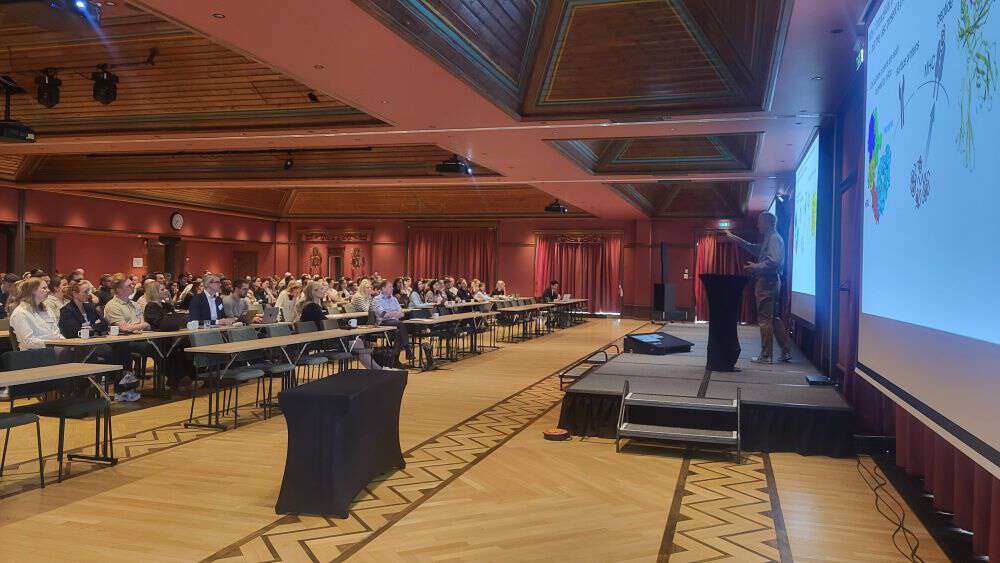
10–11 September: MATCHMAKERS summit. The last two days were reserved for the MATCHMAKERS team, at Scandic Holmenkollen Park. Michael Birnbaum opened the meeting together with representatives of the funders Cancer Research UK, the National Cancer Institute and The Mark Foundation. More than 60 team members took part.
Young researchers from almost every lab presented new results, including work on structure-based prediction, large-scale functional screening and computational protein design.
In a dedicated session, the patient advocates Annie Ellis, Brad Watts and Michele Rakoff spoke about their involvement. Watts shared his experience as a patient, Rakoff described decades of work in research and health policy advocacy, and Ellis summarised the year of the team's patient advocate committee, including a series of lab visits.
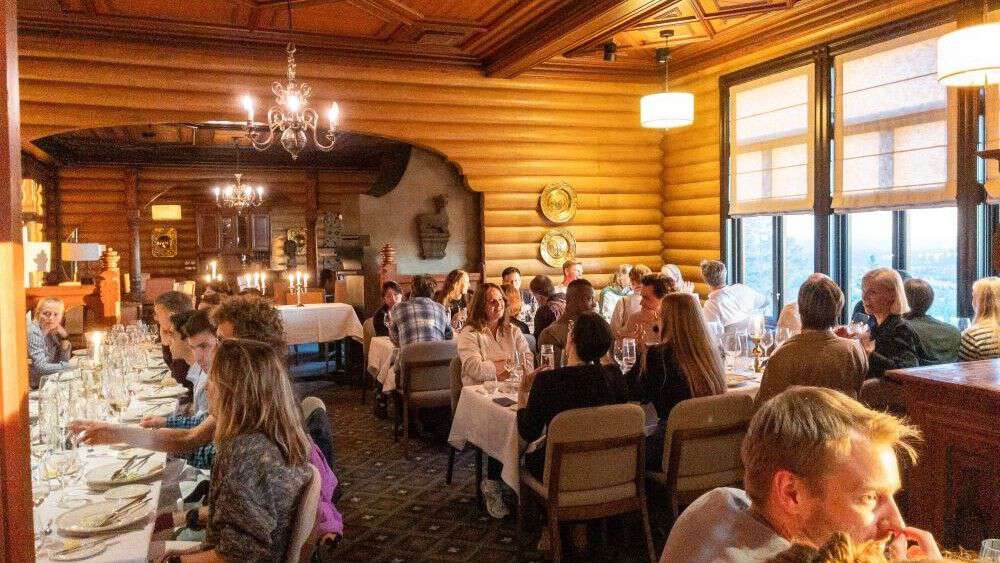
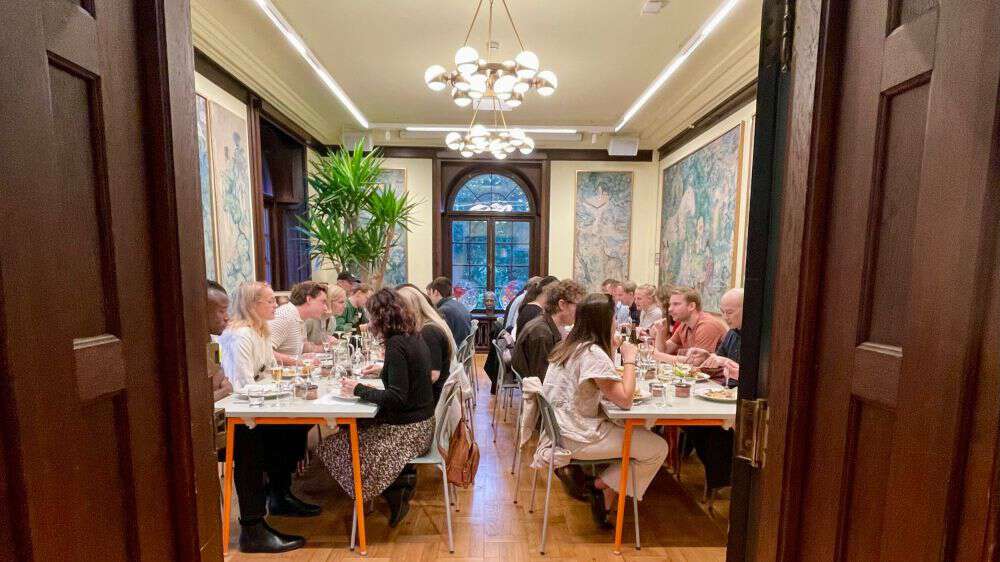
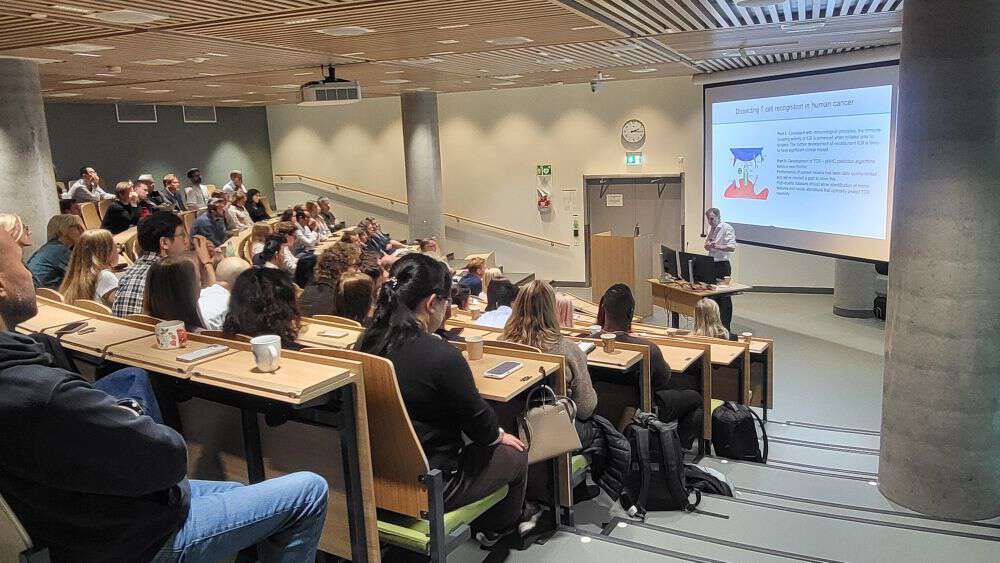
On Thursday evening, around 70 participants gathered for dinner at Villa Ekebakken. The week ended on 11 September with an open lecture by Ton Schumacher, “T cell recognition of human cancer”, in the new auditorium at the Norwegian Radium Hospital. The lecture was supported by Norsk Hydros Fond for kreftforskning.
Thanks to our supporters
The event was supported by Cancer Grand Challenges (external link), Norsk Hydros Fond for kreftforskning (external link), Tannlege Olaf Aase og frues legat (external link), the Research Council of Norway (project number 364276) (external link) and PRIMA.
The event was organised by Cancer Grand Challenges (external link), MATCHMAKERS (external link), Cancer Research UK (external link), the National Cancer Institute (external link), The Mark Foundation for Cancer Research (external link) and PRIMA.
We thank everyone whose contributions made the event possible.
Read more
About the symposium: Symposium: "Breaking the T cell - cancer recognition code"
About the MATCHMAKERS-teamet (ekstern lenke)
MATCHMAKERS' own story about the week (external link)
Artificial intelligence has been used as a tool in the work on this article. The text has been edited and quality-checked by the author.