
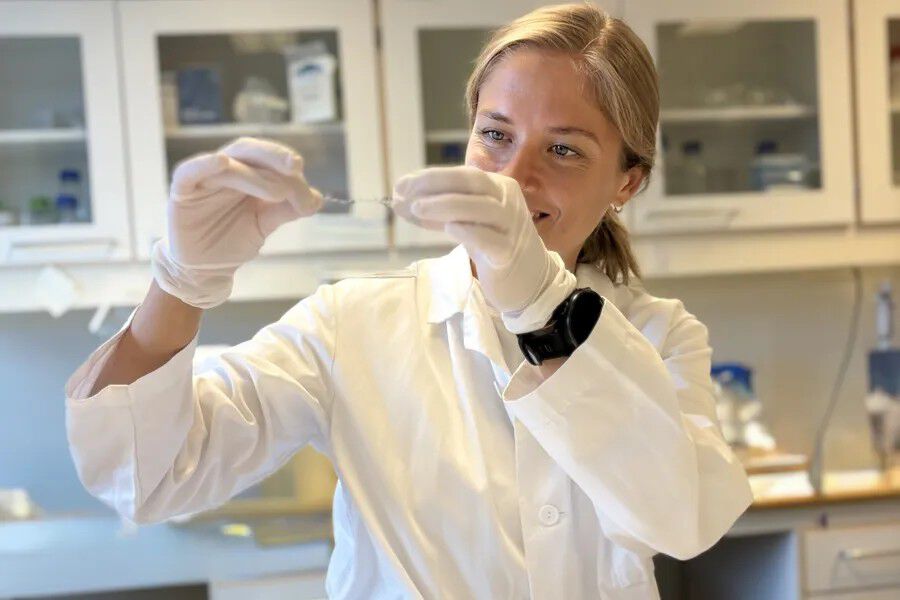
Through collaboration with researchers and biotech companies, Mirjam Dürkoop explores how modern biotechnology can help address some of the most serious health challenges we face today.
Critical Need for Novel Therapeutic Strategies Against Antibiotic-Resistant Bacteria
Antibodies constitute a fundamental component of the adaptive immune system, present in high concentrations in both the circulatory system and mucosal surfaces. Functioning as molecular sentinels, they recognize and bind to foreign antigens. However, in the face of increasingly sophisticated bacterial pathogens — particularly those exhibiting resistance to conventional antibiotics — endogenous antibody responses may prove insufficient. This underscores an urgent global need for the development of innovative therapeutic modalities capable of neutralizing pathogenic bacteria that evade current treatment paradigms.
Leveraging advanced immunological insight and molecular engineering techniques, PhD student Mirjam Dürkoop is designing synthetic antibodies with novel structural and functional properties. These engineered molecules — unlike any naturally occurring antibodies — are being evaluated for their capacity to effectively target and eliminate antibiotic-resistant bacterial strains.
A Promising Breakthrough
Recent experimental data from Dürkoop’s work revealed a particularly potent antibody construct capable of robust bacterial neutralization. This discovery has initiated a focused validation phase, and a patent strategy has been formulated to protect the intellectual property associated with the innovation.
Interdisciplinary Collaboration and Industrial Integration
The doctoral project is embedded within a highly collaborative framework, involving international research groups with specialized expertise in bacterial pathogenesis, protein design, and biotechnological innovation. Dürkoop has conducted multiple research stays abroad and is actively engaged with three biotechnology companies contributing to different facets of the project — from molecular design to translational development.
Through this interdisciplinary approach, she has assembled a versatile methodological toolkit to investigate the interface between infection biology and biomedical technology. Preliminary findings suggest that the engineered antibodies may also exhibit cytotoxic activity against malignant cells, opening potential avenues for oncological applications.
Translational Vision
Reflecting on her research trajectory, Dürkoop emphasizes the importance of cross-sector collaboration:
“I thrive in environments that bridge academia and industry. I envision a future where I can contribute to translational research within a startup or mid-sized company focused on developing breakthrough therapies — particularly in the fields of infectious diseases, global health, or cancer. I am highly motivated to realize the full potential of our recent discoveries.”
The project is conducted within the Adaptive Immunity and Homeostasis research group at Oslo University Hospital and the University of Oslo, as part of PRIMA. The work is supported by the Novo Nordisk Foundation’s Distinguished Innovator Programme. Dürkoop recently received a Mobility grant from PRIMA to go to the Netherlands to work in Professor Suzan Rooijakkers laboratory at UMC Utrecht, Netherlands.
This is an English summary based on a article at the Oslo University Hospital webpage, “Innsikt”. Read the story in Norwegian here.